
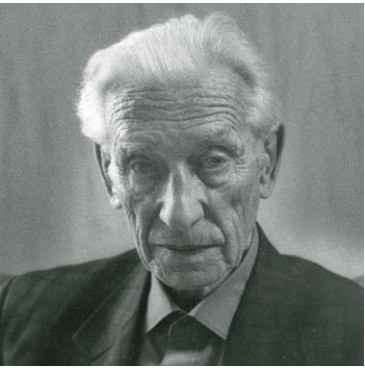
Andrejs Eglītis
1912 – 2006
- Cemetery
- Ļaudona Cemetery, Latvia
Andrejs Eglītis used poetry to express loss, attachment to homeland and the responsibility of people living in exile. His work became closely associated with the experience of Latvians separated from their country by war and occupation. Alongside writing, he participated in cultural and charitable organisation, seeking practical ways for dispersed communities to retain contact and support one another. His texts also entered musical life, extending their reach beyond readers of poetry. After a long period abroad he returned to Latvia. His biography is therefore a record of both literary work and sustained community commitment. He died in Riga in 2006 and was buried at Ļaudona, the region associated with his early life. Born near Ļaudona on 21 October 1912, Eglītis attended the local primary school, Riga City Technical Vocational School and a military college. His first collection, Kristus un mīla, appeared at his own expense in 1934. Its short, melodic poems presented a romantic outlook, sometimes with a mystical atmosphere. Two further books, Zelta vālodze and Varavīksna, followed in 1939. In this early poetry, the relationship between human beings and nature was understood through their shared participation in life, before war and occupation became dominant subjects in his writing. [2] The first Soviet occupation in 1940 brought a period of poetic silence. The deportations of 14 June 1941 profoundly disturbed him. When German forces entered Latvia later that summer, he initially greeted them as liberators and wrote verses praising them, but soon recognised that German rule offered no restoration of Latvian independence. His 1942 collection Nīcība emphasised transience and the instability of existence. During the war he worked for the periodical Laikmets as a correspondent. Conscripted into the Latvian Legion in 1943, he served in a reporting company describing military actions and everyday conditions at the front. [2] The text that became Dievs, Tava zeme deg! originated in a competition announced in spring 1943 by O. Sakārnis, dean of Kuldīga parish. Eglītis’s submission was chosen from forty-seven entries on the theme of a Latvian prayer to God. Lūcija Garūta composed music specifically for it. The première took place in Riga’s Old St Gertrude’s Church on 15 March 1944, performed by the Reiter Choir under Teodors Reiters, with Mariss Vētra and Ādolfs Kaktiņš as soloists. As fighting approached Latvia, the cantata became a significant expression of national solidarity. [2] During the night of 7–8 May 1945, Eglītis departed from Liepāja and crossed the Baltic to Sweden. In Stockholm he founded the Latvian National Foundation in 1947 and led it from 1948 to 2000. Its activities defended Latvian rights and the cause of an independent republic while supporting the continued existence of Latvian culture abroad. That work included organising Song Festivals and teaching Latvian to children. His public activity also brought him before wider exile gatherings, including the Congress of World Free Latvians in Sweden, which he addressed in 1979. [2] His poetry in exile placed the experience of his people within broader questions. Audiet mani karogā sarkanbaltisarkanā, published in 1972, connected Latvia’s fate with reflections on love, mortality and life. Later collections, including Caur daudzām zemju zemēm, caur daudzām debesīm in 1982 and Svešais cirvis cērt un cērt in 1986, continued to dwell on national tragedy. His poems were translated into Swedish, German, English, Estonian and other languages. During Latvia’s National Awakening, renewed performances of the Garūta cantata brought his words back into public cultural life in his homeland. [2] Eglītis first visited Latvia again on 8 June 1992 and settled there permanently in 1998. Tauta manas mājas, published in 1993, addressed his emotional reunion with country and people. A personally selected collection, Sila priede, appeared in 2001, followed by seven volumes of collected works between 2002 and 2006. Recognition included honorary membership of the Latvian Academy of Sciences in 1992, the Order of the Three Stars in 1994, a literary lifetime achievement award in 2002 and the Academy’s Rainis Prize in 2006. His funeral took place in the church where the cantata had first been performed. [2]
The book A Hundred Great Latvians, which includes this person, can be purchased here.
The map marker shows the cemetery; the exact grave position is not yet established.
Sources & Further Reading
Books
- [2] Apinis, P. A Hundred Great Latvians. Nacionālais apgāds, Riga, 2006, pp. 130-131. ISBN 9984-26-288-X.
Web resources
- [1] Andrejs Eglītis