
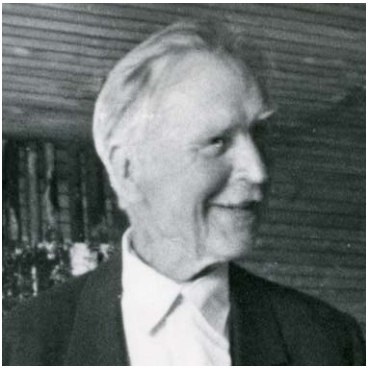
Andrejs Paulāns
1896 – 1973
- Kapsēta
- Feimaņi Cemetery, Latvia
Andrejs Paulāns brought expressive individuality to the pottery traditions of Latgale. His vessels, candlesticks and decorative forms grew from local materials and inherited methods while developing a distinctive artistic character. The results helped carry regional craft into exhibitions and wider public recognition. His work shows the continuity between useful objects and artistic expression. Shape, glaze and ornament could make an everyday form into an object valued for its visual presence as well as its function. International recognition, including at the 1937 Paris exhibition, placed this regional practice before audiences abroad. His legacy also belongs to the community of makers through whom Latgalian ceramics continued to develop. Paulāns was born in Rēzekne District on 30 November 1896 into a family whose work was closely connected with pottery. Before taking up that occupation himself, he experienced military service and serious injury. Conscripted into the Russian army in 1915, he served among the Latvian riflemen during the First World War. He was badly wounded in 1917 and returned in 1918 with sight lost in one eye and a stiff shoulder. His wartime service had also brought him the Cross of St George. In the year of his return, he began working as a potter. [2] His father, Izidors Paulāns, was an important source of practical instruction. In 1921 Andrejs built a house with his own kiln, establishing a place for sustained production. The surrounding Silajāņi area already supported a substantial community of skilled potters. Paulāns belonged to the group associated with this locality, alongside makers such as Polikarps Vilcāns, Polikarps Čerņavskis and Antons Ušpelis. Their work developed within the longer ceramic traditions of Latgale, where handmade clay vessels had been produced and sold across a wide area for generations. [2] Recognition changed during the 1920s as Latgalian pottery began to be treated as folk art. From 1925, and with the opening of an art museum in Rēzekne, researchers paid particular attention to Paulāns and his cousin Vilcāns. His work subsequently appeared at exhibitions in Sèvres in 1931, Helsinki in 1933 and Brussels in 1935, followed by Berlin in 1938 and London in 1939. International exhibition activity continued after the war, including appearances in Geneva, New York, Havana and Montreal. These presentations took objects from a regional workshop tradition into an increasingly extensive exhibition network. [2] The post-war Soviet administration brought different pressures. Officials sought to place Latgalian potters within collective farms and to standardise production, sometimes demanding fixed quantities of identical domestic vessels. Candlesticks could be prohibited because they were treated as religious objects; Paulāns encountered such a restriction from a collective-farm manager in the 1960s. He sent examples of his work as gifts to communist officials in Riga and Moscow, and he and other Latgalian makers were permitted to continue working individually. His ceramics subsequently became official presentation gifts for visiting leaders and senior communist representatives from other countries. [2] His workshop output was considerable: he prepared ten or eleven kiln firings a year, each containing roughly six hundred to seven hundred objects. Favoured colours included copper green and amber yellow, with brown and cobalt blue also used. He developed a distinctive soldier’s jug and vases resembling bells, sheaves or columns, some decorated with sun motifs. Candlesticks ranged from single supports to branching forms. Animal figures, scenes of ordinary life and subjects drawn from legends embellished his vessels, while devils and many-headed dragons appeared among his figures. He also made the clay whistles known as svilpaunieki. [2] Paulāns collected older Latgalian ceramics throughout his life for research, archives and display. He gave the Latvian Open-Air Museum examples of his own production together with pieces by other Silajāņi potters, and trained younger makers. His works entered museum and private collections in Latvia and abroad. He continued making pottery until his death on 29 November 1973 and was buried in Feimaņi Cemetery. In 1974 his kiln was transferred to the Rainis Memorial Museum at Jasmuiža, near Preiļi, where subsequent generations of ceramic artists continued to use it for firing. [2]
Grāmatu “100 Latvijas personību”, kurā iekļauta arī šī personība, var iegādāties šeit.
The map marker shows the cemetery; the exact grave position is not yet established.
Sources & Further Reading
Books
- [2] Apinis, P. A Hundred Great Latvians. Nacionālais apgāds, Riga, 2006, pp. 110-111. ISBN 9984-26-288-X.
Web resources
- [1] Andrejs Paulāns