
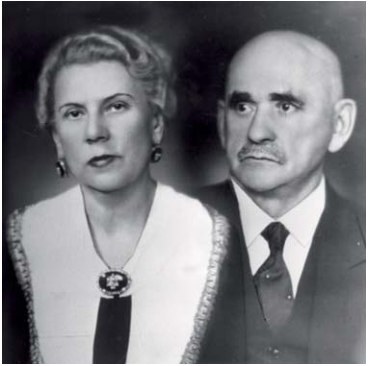
Antons Benjamiņš
- Cemetery
- Burial location not verified in this record
Antons Benjamiņš helped build one of interwar Latvia’s most influential publishing businesses. Working with Emīlija Benjamiņa, he was closely associated with Jaunākās Ziņas and the illustrated magazine Atpūta. His editorial role complemented her work as publisher and business organiser. Their publications brought news, literary contributions and images into a broad readership’s daily life. The enterprise also became part of Riga’s social and cultural networks, providing employment and visibility for writers and journalists. Its history also reflects the changing political environment of the 1930s. Antons died in 1939, before Soviet occupation destroyed the business and led to Emīlija’s deportation. The newspaper venture began on a deliberately inexpensive basis: readers could buy Jaunākās Ziņas for one kopeck. Antons took responsibility for its editorial direction, while Emīlija, then known as Simsone, acted as publisher. Its early success rested on attracting both a substantial readership and numerous advertisers. Advertising income became particularly important to the business, allowing the partners to keep the selling price accessible while expanding circulation. By the later 1930s the paper was selling around 200,000 copies in a country with approximately two million inhabitants. [2] The First World War gave the newspaper an additional practical function. More than half a million Latvians sought refuge in Russia, separating families and disrupting ordinary means of communication. Notices through which people searched for relatives helped Jaunākās Ziņas gain readers. Publication continued intermittently through the war rather than without interruption. Its subsequent growth into Latvia’s most widely read periodical therefore followed a period in which its pages had served people trying to locate missing family members as well as those seeking news. [2] Antons and Emīlija married in 1922. Their publishing activity formed part of a much broader collection of businesses and property, including stationery shops, the Burtnieks ink factory, bookbinding and zincographic workshops, and six-storey residential buildings. The chapter reports a combined daily net profit of 10,000 lats from their holdings. In 1924 they added the weekly Atpūta to their publications. Their properties also included the Pfab house at 12 K. Barona Street in Riga, two cottages in Jūrmala and a country residence at Valdeķi near Kandava. [2] Antons’s editorial work took place within a substantial professional community. The publications employed writers, poets, artists and photographers, with Jānis Kārkliņš and Ernests Arnis among their notable editors. Photographs of the staff across the late 1920s and 1930s record figures including Kārlis Skalbe, Jānis Akuraters and Arturs Bērziņš. His son Jānis Benjamiņš also worked as an editor of Jaunākās Ziņas. These staff records document the range of literary and journalistic contributors gathered around the enterprise, beyond the two people who directed and financed it. [2] The household was another meeting place for cultural and public figures. Guests included diplomats, military attachés, film personalities and members of Riga society. Performances by young artists in Emīlija’s salon could bring them to the attention of the newspaper. The couple supported Latvian writers and poets, while Emīlija initiated the Press Party in 1936 to assist renovation of the Writers’ Palace. It developed into a major annual gathering. Following Kārlis Ulmanis’s 1934 coup, she also acted as hostess at official functions, taking on a role associated with a first lady because Ulmanis was unmarried. [2] The later fate of the household gives a stark endpoint to the history of the undertaking Antons helped establish. Under Soviet occupation, its property was nationalised and Emīlija was forced into a small flat. On 14 June 1941 she was deported to Russia under an order signed by Vilis Lācis, formerly a reporter for her newspaper and then the Soviet Latvian interior commissar. Earlier support for men who had entered the new government did not secure her an audience with them. She died in deportation on 23 September 1941 from hunger and cold. [2]
The book A Hundred Great Latvians, which includes this person, can be purchased here.
The resting place has not yet been established.
Sources & Further Reading
Books
- [2] Apinis, P. A Hundred Great Latvians. Nacionālais apgāds, Riga, 2006, pp. 44-45. ISBN 9984-26-288-X.