
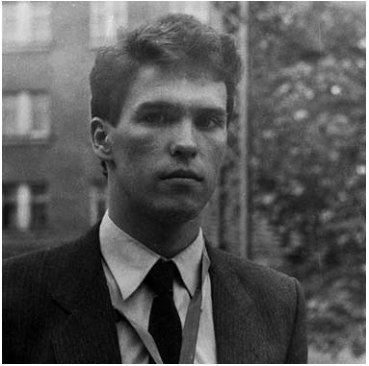
Artūrs Irbe
1967 –
Artūrs Irbe became a prominent representative of Latvian ice hockey through international competition and a long career as a professional goaltender. His NHL years included major roles with the San Jose Sharks and the Carolina Hurricanes. With Carolina, he reached the Stanley Cup Final in 2002. He also represented Latvia, linking an international club career with the growth of the national team after restored independence. Goaltending places unusual individual responsibility within a team sport, and his performances made him a recognisable figure for supporters. Later coaching activity extended his involvement in the game. His legacy belongs to both professional hockey abroad and the development of Latvia's modern sporting identity. Born in Riga on 2 February 1967, Irbe first developed his professional career with Dinamo Riga. A photograph records his appearance with the senior team in 1983, when he was sixteen. From 1987 to 1991 he played for the club in the Soviet championship, then one of the strongest hockey competitions. Dinamo finished as Soviet runners-up in 1988. His advancement from the Riga side to the Soviet national squad brought opportunities to compete at the highest international level before Latvia could field its own independent team. [2] With the Soviet team, Irbe won world championship titles in 1989 and 1990. At the latter tournament he was recognised as the best goalkeeper. His position changed during the political upheaval surrounding Latvia’s restoration of independence: in 1991, while Latvia was still within the Soviet Union, he refused to continue playing for the Soviet national side. He subsequently appeared for Latvia at numerous world championships and at the Winter Olympics in 2002 and 2006. His international record thus spans two distinct political and sporting settings. [2] Access to North American professional hockey had previously been restricted for Soviet athletes. Irbe received an offer to leave the Soviet Union illegally but did not take it. He later engaged lawyer Paul Theofanous as his agent, who helped arrange his move to the newly established San Jose Sharks. The club recruited young or relatively inexperienced players from several countries. In the 1993–1994 regular season, Irbe accumulated 4,412 minutes in goal, a league record cited in the chapter. With him playing, San Jose reached the playoffs and defeated the highly favoured Detroit Red Wings. [2] Recognition within the NHL included selection for its All-Star Games in 1994 and 1999. His club career continued with the Dallas Stars in 1996 and then the Vancouver Canucks. By the 1998–1999 season he had become Carolina’s first-choice goalkeeper. Across thirteen NHL seasons, his involvement also extended beyond playing. As a vice-president of the National Hockey League Players’ Association, he took part in negotiations with club owners concerning the league’s regulations. The chapter records the standing he acquired among fellow players, coaches and sports journalists through this work. [2] Two victories over Russia were especially prominent in his appearances for Latvia. On 5 May 2000, Latvia won 3–2 in St Petersburg, with Irbe in goal. The match coincided with celebrations marking a decade since the restoration of Latvian independence and drew an enthusiastic response at home. A second victory followed in May 2003 in Turku, Finland, where Latvia prevailed 2–1. The account singles out his contribution to both results. They occurred within a wider culture of strong travelling support, with thousands of Latvian spectators attending world championships in national colours. [2] During the 2005–2006 season Irbe played for Salzburg’s Red Bulls in Austria. His standing in Latvia was reflected in repeated recognition as the country’s most popular sportsman, as well as in the response to his national-team performances. The chapter also credits his example with encouraging many Latvian boys to begin playing hockey. This documented influence was not confined to individual match results: his sustained presence in major competitions provided a visible example for younger players following the sport from Latvia. [2]
The book A Hundred Great Latvians, which includes this person, can be purchased here.
Sources & Further Reading
Books
- [2] Apinis, P. A Hundred Great Latvians. Nacionālais apgāds, Riga, 2006, pp. 210-211. ISBN 9984-26-288-X.
Web resources
- [1] Artūrs Irbe