
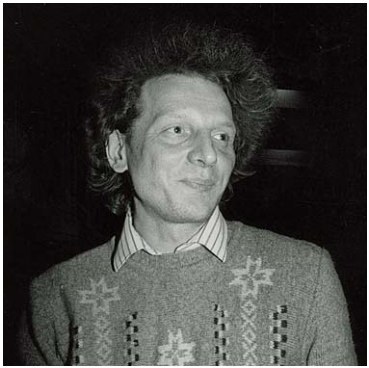
Dainis Īvāns
1955 –
Dainis Īvāns helped connect environmental concern with a broader movement for civic and national freedom. His journalism with Artūrs Snips opposing a proposed hydroelectric project on the Daugava became an important public intervention in 1986. He went on to become the first chairman of the Popular Front of Latvia in 1988. That role placed him within a rapidly growing movement seeking democratic change and, ultimately, restored independence. His later writing and public activity continued to engage with memory, landscape and responsibility. His biography shows how a campaign over a specific place can open wider questions about who has the right to decide a society's future. Born in Madona on 25 September 1955, Īvāns graduated from the philology faculty of Latvian State University in 1978. Before establishing himself in journalism, he taught Latvian language and literature and worked as a researcher at the Theatre Museum. He began journalistic work in 1979, concentrating on theatre, literature and education. These early occupations placed his writing within cultural and educational life before the environmental controversy and political events that brought him wider public recognition during the second half of the 1980s. [2] The landscape threatened by the proposed Daugavpils power station carried both ecological and cultural significance. Moscow’s plan would have placed a fourth hydroelectric station on the Daugava, upstream from Daugavpils, in the area known as the Daugava Bends. There, high riverbanks enclosed a landscape rich in plant and animal life, while Latgallian traditions existed alongside the village culture of Old Believers. The proposed flooding therefore concerned more than electricity production or the alteration of a river: it would also have damaged a distinctive cultural environment in Latgale and Augšzeme. [2] The October 1986 publication in Literatūra un Māksla prompted a wider newspaper campaign to protect the valley. Public pressure was followed by the Latvian SSR government’s abandonment of the construction plan, announced at the republic’s Academy of Sciences to an applauding audience. The episode demonstrated that a decision originating in Moscow could be challenged successfully. That year Īvāns was recognised as the most popular journalist and received the Latvian SSR Journalists’ Union award for the year’s most topical publication. The campaign became an important early event in the Third National Awakening. [2] The movement’s development during 1988 involved writers, musicians and other cultural figures. A plenary meeting of the Creative Unions on 1–2 June, initiated by Jānis Peters, marked a significant stage. Peters and Raimonds Pauls subsequently called for a public gathering at Mežaparks on 7 October, where Īvāns was among the speakers. The Popular Front was founded the next day. After Peters withdrew his nomination for the chairmanship, Īvāns emerged as a compromise candidate from a wider field and was elected on 9 October. [2] Under his chairmanship, the Front’s board called for the restoration of Latvian independence and the departure of Soviet troops. The organisation later secured a parliamentary majority in the Latvian SSR’s first multi-mandate elections and voted to restore the independent state. Īvāns became a deputy chairman of the Supreme Soviet in 1990 and participated in that vote. On 14 June that year he joined other parliamentary and government leaders at the Freedom Monument to commemorate victims of communist repression. His public responsibilities thus encompassed both institutional political change and official remembrance. [2] International appearances followed. In 1991, speaking at the European Council, he displayed a Republic of Latvia passport numbered 0001, produced at Latvia’s embassy in London and signed by Jānis Peters as head of its embassy in Moscow. He also participated in Latvia’s representation at UNESCO. After leaving active politics, he returned to journalism and led the editorial board of Literatūra. Māksla. Mēs. The chapter records awards of the Order of the Three Stars in 1995 and 2000. He joined the Latvian Social Democratic Workers’ Party in 1998 and served as its chairman from 2002 to 2005. [2]
The book A Hundred Great Latvians, which includes this person, can be purchased here.
Sources & Further Reading
Books
- [2] Apinis, P. A Hundred Great Latvians. Nacionālais apgāds, Riga, 2006, pp. 200-201. ISBN 9984-26-288-X.