
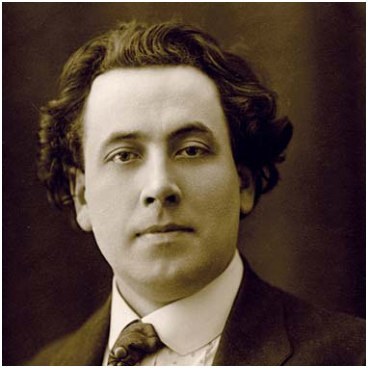
Eduards Smiļģis
- Cemetery
- Burial location requires confirmation in this record
Eduards Smiļģis shaped Latvian theatre through an approach that gave strong importance to movement, visual composition and the emotional power of performance. As a founder and leading director of the Daile Theatre, he helped create a distinctive theatrical institution. His productions drew together actors, designers and other collaborators into carefully conceived stage worlds. The influence of his work therefore extended beyond the interpretation of individual plays to the training and expectations of performers. His career passed through independence, occupation and Soviet rule, requiring theatre to operate under changing political conditions. The house associated with him in Pārdaugava became a theatre museum. Born in Riga on 23 November 1886 into a civil servant’s family, Smiļģis initially pursued a technical profession. He qualified as an engineer and worked on aircraft engines at the Motors factory. Theatre occupied the evenings left free by employment and study, when he took small parts on Riga stages. In 1912 he joined the Riga New Theatre as an actor. Among his roles there was Lāčplēsis in Rainis’s Fire and Night, performed in 1913, before war interrupted the city’s theatrical life. [2] During the First World War, Smiļģis went to St Petersburg amid the displacement of people from Latvia. He performed with the Latvian Theatre there and attended Meyerhold’s courses in stage production. Returning in 1920, he joined Rainis in establishing the Daile Theatre. Its opening followed seven months later with Rainis’s Indulis and Ārija. The undertaking began in severe material hardship after years of warfare: actors initially received no wages and faced shortages of food. The working partnership between Rainis and Smiļģis ended after a quarrel in 1921, although Rainis’s plays retained an important place in Smiļģis’s repertoire. [2] For much of the theatre’s early history, Smiļģis combined directing with its principal male acting assignments. During the first decade he undertook almost all such parts because the company did not yet have enough performers equipped for his theatrical methods. He remained a leading actor until 1941. His repertoire included Shakespeare’s Hamlet and Othello, Ibsen’s Peer Gynt, Lagerlöf’s Gösta Berling and the figures of Indulis and Joseph in plays by Rainis. By the late 1930s he was beginning to pass major roles to Edgars Zīle. Across his work at the theatre, he played seventy roles and directed nearly 330 productions. [2] The development of performers was a continuing part of this undertaking. Smiļģis established a studio and personally taught the actors who became closely associated with his name. His own working life was centred on the theatre, without regular holidays or days off. Production involved an extensive circle of collaborators, including composers Marģeris Zariņš, Burhards Sosārs and Indulis Kalniņš. Playwright Valdis Grēviņš adapted works from the international classical repertoire to meet his staging requirements. Felicita Ertnere was a particularly close collaborator in carrying his plans into performance. [2] Rainis’s drama continued to provide opportunities for substantial productions long after the two founders ceased working together. Smiļģis rehearsed Fire and Night with his company in 1947, and in 1956 returned to I Played, I Danced. That staging remained in performance for more than twenty years, with Harijs Liepiņš appearing as Tots. The enduring repertoire accompanied Smiļģis’s interest in experimentation and expressive theatrical form. Accounts of his performances emphasised the force of his temperament, the emotional range of his acting and the romantic character of his interpretations. [2] His engineering skills also found practical use in theatre buildings: he reconstructed both auditorium and stage facilities. Work on a new Daile Theatre began in 1959, but the building was not completed until 1977. Smiļģis did not live to see its completion; he died on 19 April 1966 and was buried in Riga’s Rainis Cemetery. His financial affairs had also attracted attention during his lifetime. On one of his anniversaries, the government of Kārlis Ulmanis cancelled a substantial debt associated with his house, another material part of the extensive undertaking surrounding his theatrical career. [2]
The book A Hundred Great Latvians, which includes this person, can be purchased here.
The resting place has not yet been established.
Sources & Further Reading
Books
- [2] Apinis, P. A Hundred Great Latvians. Nacionālais apgāds, Riga, 2006, pp. 88-89. ISBN 9984-26-288-X.
Web resources
- [1] Eduards Smiļģis