
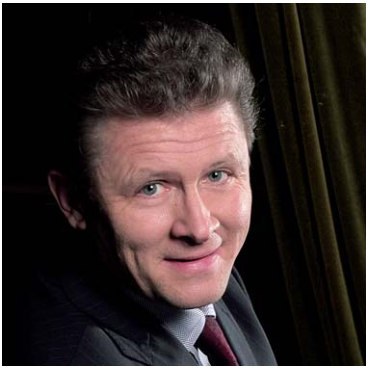
Egils Siliņš
Egils Siliņš established an international career as a bass-baritone. Work on major opera stages brought his voice to audiences beyond Latvia, in a repertoire requiring both vocal command and sustained dramatic interpretation. Opera places an individual singer within a large collaboration of orchestra, conductor, director and fellow performers. His career developed through those relationships and through roles in different languages and musical traditions. He belongs to a generation of Latvian musicians whose work became firmly integrated into international performance life. Siliņš was born in Līgatne in 1961 and learned French horn and trumpet during his school years. He later studied with Professor G. Antipov at the Latvian Academy of Music. After completing his training, he made his Latvian National Opera debut in the title part of Boito’s Mephistopheles. Competition successes followed in 1988, both at the Jāzeps Vītols competition in Riga and at an international vocal competition in Chişinău. Recognition at the Hans Gabor Belvedere Singing Competition in 1989 preceded a three-year engagement in Frankfurt. [2] At Frankfurt Opera from 1990 to 1993, his assignments included Colline in Puccini’s La bohème, Basilio in Rossini’s The Barber of Seville and the police chief in Shostakovich’s Lady Macbeth of Mtsensk. He then worked at Basel Opera until 1996. The Basel repertoire extended from Sarastro in Mozart’s The Magic Flute to Barak in Richard Strauss’s The Woman Without a Shadow. It also included Sparafucile in Verdi’s Rigoletto, Baldassare in Donizetti’s La favorita and Lord Sidney in Rossini’s Il viaggio a Reims. [2] Between 1996 and 2000, Siliņš held engagements with both the Vienna State Opera and the Vienna Volksoper. His Volksoper debut as Méphistophélès in Gounod’s Faust brought particular acclaim, while his first State Opera appearance was in Bellini’s I puritani. Other assignments during this period included the title character in Mussorgsky’s Boris Godunov, Oroveso in Bellini’s Norma, Tiresias in Enescu’s Oedipe and the Grand Inquisitor in Verdi’s Don Carlos. At the Bregenz Festival in 1997, his performance of the title role in Rubinstein’s The Demon received international recognition. [2] Further debuts widened the geographical reach of his career. In 1998 he appeared at Milan’s La Scala as the Prefect in Donizetti’s Linda di Chamonix. His Metropolitan Opera appearances in 2000 included Colline and Basilio. The following year he made his Hamburg State Opera debut as Rangoni in a new production of Boris Godunov. In 2002 he sang Klingsor in Wagner’s Parsifal at Lyric Opera of Chicago. Alongside these engagements, his festival repertoire included Orlik in Tchaikovsky’s Mazeppa in 1991 and Fotis in Martinů’s The Greek Passion in 1999. [2] Concert work formed another substantial part of his activities. He performed chamber music and solo parts in works by Latvian, Austrian and Russian composers, as well as in major choral compositions. His repertoire included Beethoven’s Ninth Symphony, the requiems of Mozart and Verdi, Brahms’s German Requiem and Mendelssohn’s Elijah. Recordings documented several aspects of this work: Stravinsky’s Les Noces appeared in 1995, followed by Schubert masses and an opera-aria collection in 1997. Regina Coeli, recorded with the Latvian Radio Choir, was released in 1999, and a recording of The Greek Passion followed in 2000. [2] His international schedule continued to include appearances at the Latvian National Opera and the annual Sigulda Opera Festival. Pianist Māris Skuja was a close musical companion; they performed together in the National Opera’s New Hall in November 2001. Latvia recognised Siliņš with its major music award in 1996 for his competition achievements, Vienna performances and Zaccaria in the Latvian National Opera’s Nabucco. A further award in 2003 honoured his title-role performances in The Demon and Mozart’s Don Giovanni. Radio journalist and public-event director Ināra Ancāne also wrote a book about him. [2]
The book A Hundred Great Latvians, which includes this person, can be purchased here.
Sources & Further Reading
Books
- [2] Apinis, P. A Hundred Great Latvians. Nacionālais apgāds, Riga, 2006, pp. 204-205. ISBN 9984-26-288-X.