
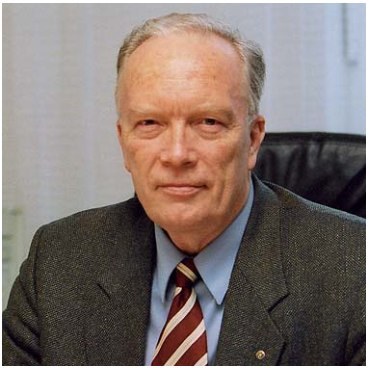
Elmārs Grēns
1935 –
Elmārs Grēns helped develop molecular biology in Latvia, building research around the structure and behaviour of genetic material. His work belonged to a period when new methods were changing the questions biologists could ask about cells and viruses. His contribution also involved the creation of research groups, training opportunities and institutions capable of sustaining the field. He was associated with the development of Latvia's biomedical research community and with university teaching in molecular biology. These activities linked individual investigations to the preparation of later generations of scientists. His place in Latvian scientific history rests on this combination of research and institution building, including efforts to connect local expertise with international scientific networks. Born in Riga on 9 October 1935, Grēns completed his chemistry studies at the Latvian State University in 1958. He then joined the Institute of Organic Synthesis within the Latvian Academy of Sciences, where his early scientific development took place. His qualifications followed in stages: he defended his candidate thesis in 1963 and obtained a doctorate in chemical sciences in 1968. Alongside organic chemistry, he increasingly investigated nucleic acids, bringing his chemical training into the study of biological material. [2] In 1964 he established the Nucleic Acids Chemistry Group. Its beginnings belonged to a particular institutional moment: Soviet prohibitions affecting research into the molecular foundations of life had been lifted, and the group was among the early organisations to undertake such work afterward. It expanded over subsequent years and attracted recognition both within the Soviet Union and internationally. In 1993 its accumulated research activity and personnel provided the foundation for the Biomedical Research and Study Centre, giving the earlier group a new institutional form. [2] A substantial part of Grēns’s theoretical research concerned viral RNA, particularly the molecular processes involved in its replication and translation. His virological investigations also examined the structure and characteristics of bacterial viruses containing RNA. Other major subjects included hepatitis B, hepatitis C and bovine leukaemia virus. These were distinct areas within a research record spanning molecular biology, genetics and virology. The chapter identifies his publications on viral RNA mechanisms as an especially important part of the international standing of that work. [2] During the 1980s, genetic engineering and biotechnology became prominent in his programme. Under his direction, researchers began producing recombinant interferons, interleukins and viral antigens through genetic engineering. His later activities included establishing a programme devoted to molecular investigations in oncology. He also directed Latvia’s human genome programme, encompassing genetic studies of the country’s population. The range of these projects extended from the production of biological substances to research on cancer and human genetic variation, alongside his established investigations of viruses. [2] Teaching formed a sustained part of his responsibilities. From 1968 he lectured in molecular biology and genetics across the University of Latvia’s chemistry, biology and medicine faculties. He also taught at higher education institutions abroad and organised international courses and schools in Riga devoted to molecular biology and biomedicine. A further development came in 1998, when UNESCO supported his establishment of the International Centre of Biomedicine and Biotechnology. Its purpose combined research with advanced instruction, extending the educational activities already associated with his university and laboratory work. [2] Grēns also participated in the administration and assessment of science. He helped establish the Latvian Council of Science and became its first chairman, while serving for many years in the Senate of the Latvian Academy of Sciences. His European responsibilities included work with biochemical and biotechnology federations and the European Union’s research framework programme. He became a full member of the Latvian Academy and a corresponding member of the Russian Academy in 1987, received a habilitated doctorate in biology in 1992, and joined Academia Europaea in 1993. Latvia’s Cabinet of Ministers recognised his molecular biology achievements in 2000. [2]
The book A Hundred Great Latvians, which includes this person, can be purchased here.
Sources & Further Reading
Books
- [2] Apinis, P. A Hundred Great Latvians. Nacionālais apgāds, Riga, 2006, pp. 160-161. ISBN 9984-26-288-X.