
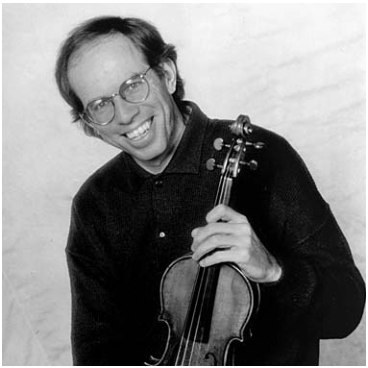
Gidon Kremer
1947 –
Gidon Kremer became internationally known as a violinist whose repertoire extends beyond established concert favourites. His training included study with David Oistrakh, while his later career combined major solo appearances with chamber music and a strong interest in living composers. In 1997 he founded Kremerata Baltica, bringing together young musicians from the Baltic countries. The ensemble made collaboration and artistic exploration central to its identity. His advocacy has helped unfamiliar or neglected works find audiences alongside better-known music. His contribution therefore includes individual performance, the cultivation of an ensemble and a continuing argument for curiosity in musical programming. Kremer’s early public career can be traced through a sequence of performances and competition successes. Born in Jūrmala on 27 February 1947, he attended the Emīls Dārziņš Music School in Riga. His first solo recital took place in Riga on 3 April 1964. International recognition followed through prizes at competitions in Brussels in 1967, Montreal and Genoa in 1969, and Moscow in 1970. The competitions named in the chapter include the Queen Elisabeth, Paganini and Tchaikovsky contests. His instrument is identified as the Guarnerius del Gesù violin known as the ex-David, dating from 1730. [2] After emigrating from the Soviet Union in the 1970s, he developed a career involving extensive travel between countries and concert venues. The chapter records residences in Switzerland and France alongside his retention of Latvian citizenship and use of a Latvian passport. In 1981 he established a chamber music festival at Lockenhaus in Austria. His recording activity also became substantial, exceeding one hundred albums, many of which received international distinctions. Concert performance, recording and festival organisation therefore all formed established parts of his work before the creation of his Baltic orchestra. [2] His expressed view of interpretation places the composer’s work before the performer’s display of technical accomplishment. He has argued that brilliance alone is insufficient if a performance communicates neither fresh understanding nor spiritual substance. The composers closely associated with his repertoire include Alfred Schnittke, Arvo Pärt, Giya Kancheli, Sofia Gubaidulina, Valentin Silvestrov, Luigi Nono and Astor Piazzolla. Latvian composer Pēteris Vasks occupies a particularly important place. When Kremer resumed concert appearances in Latvia with international colleagues in the late 1980s and early 1990s, programmes included music by Schnittke and Gubaidulina. [2] The organisation of Kremerata Baltica differed from that of an orchestra whose musicians work together daily in one city. The chapter describes twenty-five players, with an average age of twenty-seven at the time of its account, undertaking five or six extended tours each year. Their schedule included the Baltic countries as well as other international destinations, amounting to more than sixty concerts annually. Members also performed in the smaller formation Kremerata Musica. Latvia’s, Lithuania’s and Estonia’s culture ministries formalised support through a cultural cooperation agreement, giving the cross-border ensemble an institutional framework as well as a shared performing programme. [2] From summer 2004, Kremer organised Kremerata Baltica festivals in Riga and Sigulda. Their successive programmes placed Shostakovich and Schnittke, Mendelssohn, and Mozart and Vasks within changing thematic settings. His participation in Latvian musical life also included the 2003 Song Festival’s symphonic concert, where he performed with the Liepāja Symphony Orchestra, the Latvian National Orchestra and Kremerata Baltica. Another documented collaboration brought him together with Vasks and conductor Māris Sirmais in 2001 to prepare Vasks’s Planescape at the University of Latvia’s Great Hall; its first performances took place in Riga, Basel and Vienna. [2] Honours recorded in the chapter include two Latvian Great Music Awards, the Baltic Assembly Award and a prize from UNESCO’s International Music Council. He became an officer of the Order of the Three Stars in 1997 and an honorary member of the Latvian Academy of Sciences in 1999. From 2003 to 2005 he served as a United Nations goodwill ambassador in Latvia. That appointment recognised both his musical achievements and his activities concerning multicultural cooperation, social integration and human rights, extending the documented scope of his public contribution beyond concert performance. [2]
The book A Hundred Great Latvians, which includes this person, can be purchased here.
Sources & Further Reading
Books
- [2] Apinis, P. A Hundred Great Latvians. Nacionālais apgāds, Riga, 2006, pp. 192-193. ISBN 9984-26-288-X.