
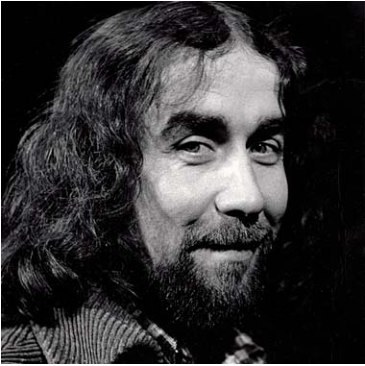
Imants Kalniņš
1941 –
Imants Kalniņš composed across boundaries that often separate concert music from popular culture. His work includes symphonic and choral music, songs, and scores for theatre and film. Rock influences became part of his musical language without exhausting its range. Collaborations with performers and poets brought many of his songs into everyday cultural life. The gatherings known as Imantdienas developed around the shared experience of performing and listening to his music. His participation in politics added another dimension to his public career. The central artistic achievement, however, is a body of work that allowed different musical audiences to meet through memorable melodies, distinctive expression and ambitious larger forms. Born in Riga on 26 May 1941, Kalniņš studied composition with Ādolfs Skulte at the Latvian State Conservatory and graduated in 1964. His first symphonies followed in 1964 and 1965. During the creative period extending from the 1960s through the 1980s, he produced symphonic works, two operas, two oratorios and scores for stage and screen. He also prepared three concert programmes for Turaidas Roze. The source identifies collaborations with orchestras in Detroit, Boston and St Petersburg as particularly successful parts of his international musical activity. [2] The history of the Fourth Symphony illustrates the restrictions imposed on musical expression in the Soviet period. In 1973 officials required Kalniņš to alter its finale, objecting to the setting of texts by the American poet Kelly Cherry. The chapter links their objections to the movement’s imagined portrayal of a free and happy existence beyond the Iron Curtain. A major later performance restored the original version: in 1997 Neeme Järvi conducted it with the Detroit Symphony Orchestra, bringing this form of the work to an American audience. [2] In his approach to rock, Kalniņš emphasized a musical outlook rather than a category of entertainment. He distinguished music dealing with elementary emotions from rock’s capacity to carry an attitude toward the world. Words consequently occupied an important place in his songs. Among the poets he set, his brother Viktors Kalniņš, known as Viks, held particular significance. During the 1970s and 1980s, Austra Pumpure and her pupils performed songs using Viks’s texts. Menuets, Turaidas Roze and Autobuss debesīs were also important interpreters, carrying Kalniņš’s compositions to listeners outside Latvia as well as within it. [2] The first Imantdienas gathering took place in 1976 at the Emīls Dārziņš and Jānis Sudrabkalns Museum at Jāņaskola. Its initiator was Jānis Blūms, the leader of Menuets. Conductors Leonīds Vīgners and Imants Kokars participated with their choirs, linking the occasion to Latvia’s established choral culture. Kalniņš’s songs could be readily arranged for choirs and became a recurring presence at Latvian Song Festivals. The open-air gatherings attracted thousands of listeners and developed into a tradition associated with his name-day. In 1982 the Latvian Communist Party prohibited them; they resumed in 1995. [2] The Third Latvian National Awakening marked the beginning of a period in which parliamentary activity accompanied composition. Kalniņš was elected to the final Supreme Soviet of the Latvian SSR and subsequently served in the fifth, seventh, eighth and ninth Saeima of the Republic of Latvia. His political affiliation lay with nationally oriented forces. A photograph from 2003 documents this dual working life in his parliamentary office, with legislation for the Budget and Finance Committee on his computer. The chapter also records his knowledge of several languages, including Chinese, alongside these musical and public responsibilities. [2] Later recognition included honorary membership of the Latvian Academy of Sciences in 1996 and the Order of the Three Stars in 1998. Composition continued during his parliamentary years: the first performance of his Sixth Symphony took place in 2005, when he was photographed with his wife Agra. Family members also appear in the record of the musical gatherings, including his daughter, the actress Rēzija Kalniņa, and his son, the singer Marts Kristiāns Kalniņš. The documented reception of his work thus encompasses orchestral performances abroad, the repertoires of Latvian ensembles, choral festivals and the renewed continuity of Imantdienas. [2]
The book A Hundred Great Latvians, which includes this person, can be purchased here.
Sources & Further Reading
Books
- [2] Apinis, P. A Hundred Great Latvians. Nacionālais apgāds, Riga, 2006, pp. 178-179. ISBN 9984-26-288-X.
Web resources
- [1] Imants Kalniņš