
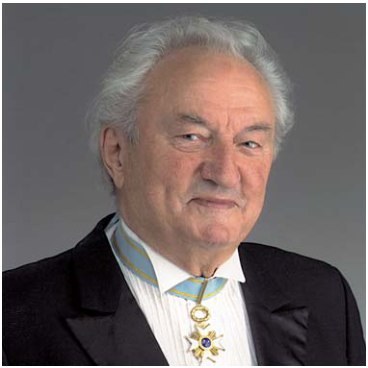
Imants Kokars
1921 – 2011
- Cemetery
- Burial location requires confirmation; a named CEMETY record has been located for follow-up
Imants Kokars helped develop the technical ambition and international reputation of Latvian choirs. His leadership of ensembles, including the chamber choir Ave Sol, combined disciplined preparation with a willingness to explore demanding repertoire. He also taught conductors and played a major role in the Song Festival tradition. Those two settings required different scales of work: the detailed sound of a chamber ensemble and the coordination of thousands of singers. His contribution continued through the musicians he trained. Born in Gulbene on 16 July 1921, Kokars was the elder of twins whose births fell on different calendar days; his brother Gido was born on 17 July. By 1945, while studying at the Cēsis People’s Conservatory, Imants was directing the mixed choir of the Cēsis Teachers’ Institute. He brought the teachers’ choir to the All-Latvian Song Festival in Riga in 1948, where it won the choral competition. That success established his reputation well before his later appointments at Latvia’s principal music institutions. [3] Teodors Kalniņš encouraged him to pursue conservatory studies, which he undertook from 1951 to 1956. During this period he also worked as a choirmaster with the Latvian Radio Choir. In 1955 he began a thirty-five-year association with the male choir Dziedonis as its artistic director and principal conductor. The ensemble won the Song Festival competition eight times between 1960 and 1990. Its concerts took Kokars both around Latvia and abroad, and its performances provided creative encouragement to Latvian composers writing for male voices. [3] His formal teaching career at the Jāzeps Vītols State Conservatory of Latvia began in 1963. He became a professor in 1975 and served as rector from that year until 1990. His work with musicians also extended beyond the conservatory: he delivered master classes in Canada, Germany, the Netherlands, Belgium, Norway and Israel, and served on juries at international choral competitions. These activities accompanied, rather than replaced, the continuing responsibilities of rehearsing ensembles and preparing them for concerts and competitive appearances. [3] Ave Sol, founded in 1969, gave him a setting in which to encourage contemporary Latvian composition and widen the stylistic range of choral programmes. All of its singers had completed higher musical education. During his artistic directorship, which lasted until 2001, its competition successes included a folk-music first prize at Arezzo in 1974 and Grand Prix awards at Debrecen in 1982, Spittal an der Drau in 1983 and Tolosa in 1990. A further first prize followed at Marktoberdorf in 1991. The choir also built a substantial recording catalogue. Gido contributed as singer, director and conductor; Imants’s son Uldis later became its principal conductor. [3] Beginning in 1965, Kokars served as a head conductor at nine consecutive All-Latvian Song Festivals. Under Soviet rule, these gatherings had a complicated public role: officials presented them as achievements of socialist amateur culture, while participants and audiences sustained Latvian cultural self-awareness through them. Programmes included Soviet composers, but audiences requested Latvian folk songs and works from the national choral tradition as encores. When such music was absent from the official programme, choirs sometimes sang it afterwards, with Imants and Gido among those prepared to conduct the assembled singers. [3] Kokars also initiated the Rīga Dimd international chamber-choir festival and helped establish the Nordic–Baltic Choir Festival as an initiator, organiser and head conductor. Between 1996 and 2000 he managed the twelve-disc Anthology of Latvian Choral Music, extending his work into the recorded preservation of repertoire. Recognition included honorary membership of the Latvian Academy of Sciences in 1994, the Order of the Three Stars in 1995 and the Great Music Award in 1996. His documented contribution thus encompassed performance, musical education, festival organisation and the creation of an extensive recorded resource. [3]
The book A Hundred Great Latvians, which includes this person, can be purchased here.
The resting place has not yet been established.
Sources & Further Reading
Books
- [3] Apinis, P. A Hundred Great Latvians. Nacionālais apgāds, Riga, 2006, pp. 136-137. ISBN 9984-26-288-X.