
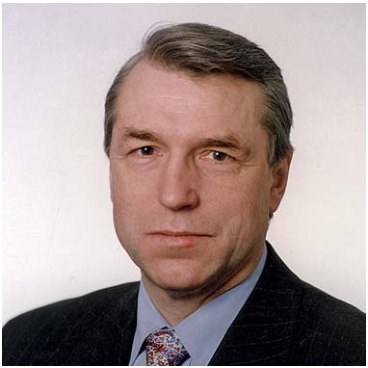
Ivars Kalviņš
1947 –
Ivars Kalviņš developed a career in organic and medicinal chemistry in Latvia. His research and institutional work at the Latvian Institute of Organic Synthesis connected the design of chemical compounds with questions relevant to pharmaceutical research. A significant part of his contribution involved sustaining research teams and the infrastructure needed for long-term investigation. His career spans major changes in the organisation and funding of Latvian science, including the transition after restored independence. Born in Riga on 2 June 1947, Kalviņš graduated from the University of Latvia’s Faculty of Chemistry in 1969. He then joined the Institute of Organic Synthesis, working as a senior engineer and supervising a research group. He defended his doctoral thesis in 1976 and completed a habilitated doctorate in 1988. His early international experience included postdoctoral research in Professor Rolf Huisgen’s laboratory at the University of Munich in 1979. These appointments and qualifications preceded his advancement into the institute’s senior scientific and administrative positions. [2] The institution he joined had been founded in 1957 by Solomon Hiller, with Gustavs Vanags also making an important contribution to its establishment and development. Its remit combined the discovery of biologically active substances with the methods needed to synthesise and produce them. The institute developed cardiovascular, anticancer, antiviral, antimicrobial and psychotropic preparations. According to the chapter’s account, it supplied a quarter of the original medicines invented in the Soviet Union. More than seventy preparations, including seventeen original products, had been developed and introduced into use through its work. [2] Kalviņš became head of the Laboratory for Medicinal Chemistry in 1986 and deputy director for scientific research in 1987. He took charge of the Department for Medicinal Chemistry in 1992 and became institute director in 2003. Election to the Latvian Academy of Sciences followed in 1994. The institute’s research brought together synthetic and physical chemists, biologists, physicians, physicists, technologists and cybernetics specialists. Their shared tasks included preparing new compounds and examining their chemical and biological properties as stages in the development of medicinal products. [2] Among Kalviņš’s principal contributions was the development of Mildronate, an anti-ischaemic medicine. At the time described in the chapter, it accounted for sixty per cent of GRINDEX’s production and profit and was identified as Latvia’s leading intellectual export. The pharmaceutical company had grown from two experimental plants established through the institute and later reorganised under deputy director Valdis Jākobsons. Kalviņš also directed work that produced the anticancer immunostimulant Leakadine. His recorded output exceeded five hundred research publications and included 225 patents and inventor’s certificates; forty-three of these concerned Mildronate alone. [2] International collaboration connected this work with research centres in Europe, America and Japan. In 1996 Kalviņš participated in discussions of Japanese clinical research results for Mildronate, and in 1998 he joined colleagues on a working visit to Taiho Pharmaceutical in Tokushima. His educational activity included lectures abroad and teaching in Riga Technical University’s Faculty of Materials Science and Applied Chemistry. He also worked with Latvian higher-education institutions in training chemistry and pharmacy students, supervised doctoral research and provided financial support enabling school pupils to participate in international chemistry competitions. [2] A sequence of awards recognised both his research and its practical applications. He received the D. H. Grindel Medal in 1996 and the Solomon Hiller Medal in 1997. In 2003 the Latvian Academy of Sciences awarded him the Gustavs Vanags Prize for publications investigating the synthesis and properties of bioactive, low-molecular-weight nitric oxide inducers and donors; he also received the Paul Walden Medal that year. The World Intellectual Property Organization honoured his sustained work as an inventor with a certificate and gold medal in 2004. Latvia awarded him the Order of the Three Stars in 2006. [2]
The book A Hundred Great Latvians, which includes this person, can be purchased here.
Sources & Further Reading
Books
- [2] Apinis, P. A Hundred Great Latvians. Nacionālais apgāds, Riga, 2006, pp. 194-195. ISBN 9984-26-288-X.