
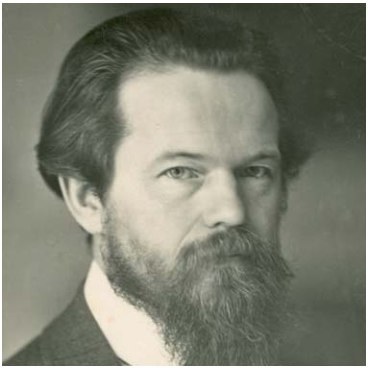
Jānis Jaunsudrabiņš
1877 – 1962
- Cemetery
- Ķiškas Cemetery, Latvia; remains returned in 1997
Jānis Jaunsudrabiņš worked with both words and images. His writing drew on childhood experience, rural life and close observation, while painting provided another way of recording the world around him. Baltā grāmata became one of his best-known works, alongside the Aija trilogy. Displacement during the Second World War changed the setting of his later life. In Germany he continued to write, carrying memories of Latvia into the experience of exile. His work makes a useful connection between everyday details and the larger question of belonging. He died in Körbecke in 1962. His remains were returned to Latvia in 1997. Born in Nereta parish on 25 August 1877, Jaunsudrabiņš attended the local Riekstiņi school and completed his education at Vecsāti Agriculture School in 1897. His artistic studies followed a different course, taking him to V. Blum’s Art School in Riga and then to Munich. In 1908–1909 he studied at the Academy of Art in Berlin. He also pursued further training in France and Italy. This education accompanied a working life in which literary production and visual art remained substantial, continuing occupations rather than successive stages of a single career. [2] His first published poem, Ziemas nakts, appeared in Latviešu Avīzes in 1896. A decade later, his play Traģēdija received its première. The story Vēja ziedi, published in the newspaper Latvija in 1907, brought his first significant literary success. Rather than restricting himself to one genre, he produced novels, short stories, sketches, drama, lyric poetry and satirical writing. Translation formed another part of his output. His major translations included Knut Hamsun’s Pan, Charles de Coster’s narrative about Thyl Ulenspiegel and Lamme Goedzak, and Guy de Maupassant’s Bel-Ami. [2] Several important publications followed in close succession. The first Aija volume appeared in 1911, followed by Atbalss in 1914; the trilogy was completed with Ziema in 1925. Its treatment of rural society included detailed characterisation and a broad account of people’s lives. His poetry collections Dzejoļi and Dziesminieks were published in 1911 and 1912 respectively. Early sketches for Baltā grāmata reached readers through the press in 1911, while the illustrated childhood work developed over 1914–1921. Jaunsudrabiņš supplied its drawings himself, and the chapter places him among the figures who established approaches to illustration in Latvian children’s books. [2] During the First World War, he and his family found refuge in the Northern Caucasus. Experiences there provided material for later fiction, while he continued painting and held four exhibitions. Afterward, he participated regularly in major exhibitions of Latvian artists and mounted solo exhibitions in Riga in 1921 and 1927. In 1919 he helped establish the Independent Artists’ Unit and became its first chairman. He also contributed to Latvian art theory and criticism. His paintings were chiefly academically realistic landscapes in restrained colours, alongside flower studies and occasional portraits; his graphic work included covers for his own books and those of other writers. [2] The years from 1918 to 1936 were particularly productive, bringing numerous sketches and stories as well as the novels Jaunsaimnieks un velns and Neskaties saulē. Fishing, a frequent occupation outside his work, also became a literary subject. His collection Ar makšķeri appeared in 1921 and was expanded and republished as Ūdeņi in 1935. The biographical account describes his preference for working close to nature and spending time alone. It also records his unobtrusive attendance at theatrical premières, where he chose a distant seat and left quietly after the performance. [2] His later bibliography includes Bez dzimtenes and Es stāstu savai sievai, both dated 1946, and Piemini Latviju! In 1951 he wrote Zaļā grāmata, returning to his adolescent years as a shepherd; it received an honour award from the American Latvian Union’s Culture Fund in 1952. Publication of his collected writing extended across generations: eight volumes appeared in 1927–1931, followed by a fifteen-volume edition in 1981–1985. A supplementary volume devoted to his exile writing was published in 2000. His final resting place in Latvia is Ķiškas Cemetery. [2]
The book A Hundred Great Latvians, which includes this person, can be purchased here.
The resting place has not yet been established.
Sources & Further Reading
Books
- [2] Apinis, P. A Hundred Great Latvians. Nacionālais apgāds, Riga, 2006, pp. 74-75. ISBN 9984-26-288-X.