
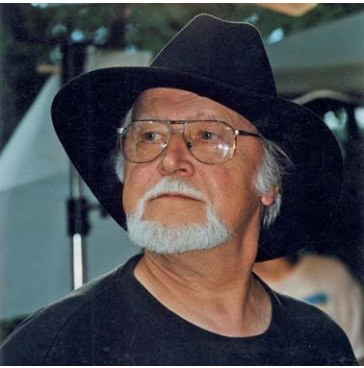
Jānis Streičs
1936 – 2026
- Cemetery
- Petrausku Cemetery, Riebiņi parish, Preiļi municipality, Latvia; burial reported 3 May 2026
Jānis Streičs used cinema to explore character, community and the tensions of everyday life. His films ranged from popular comedy to literary adaptation and stories rooted in Latgale. Limuzīns Jāņu nakts krāsā, Teātris and Cilvēka bērns represent different aspects of that range. An attentiveness to actors and to the details of social behaviour helped make his films familiar reference points in Latvian culture. Humour could coexist with disappointment, affection and criticism. His career developed at Riga Film Studio and continued across the transition to restored independence. He died in March 2026. His work leaves a varied screen record of the people, landscapes and relationships that occupied his imagination. Streičs was born in 1936 in Anspoki, near Preiļi, and attended school in Riga and Rēzekne. Following service in the Soviet army, he entered the directing course in the theatre faculty of the Latvian State Conservatory in 1959, after teaching had already begun. He arrived in military uniform and without financial support from relatives. Drawing, decorative work and the construction of scenery for amateur theatres helped him earn a living. Alongside his studies, he directed stage productions, acted in performances organised by others and took an active part in student and theatrical life. [3] A professional opportunity came in 1963, when Aleksandrs Leimanis invited his pupil to become an assistant at Riga Film Studio. Streičs subsequently worked in numerous capacities, including assistant and second director, production manager, teacher, screenwriter and actor. The chapter records his participation in more than thirty films and credits him with twenty feature films as director. Within Soviet cinema’s system of professional ranking, he and Aloizs Brenčs were the only Latvian feature-film directors to receive the highest category for producing directors. His career therefore combined extensive practical studio experience with formal recognition within that system. [3] My Friend — a Superficial Fellow, released in 1975, gave Jānis Paukštello the role of an ordinary man through whom Streičs addressed life in Soviet Latvia. The chapter regards the film as unusually outspoken for its setting. His 1978 adaptation of Somerset Maugham’s Theatre offered a different challenge, with Vija Artmane playing Julia Lambert and Streičs himself appearing as the storyteller. The Unfinished Dinner also appeared in 1978. In 1981 his output included both To Remember or to Forget and the midsummer comedy featuring Lilita Bērziņa as Aunt Mirta, a film singled out by Latvian audiences for its recognisably national character. [3] The Child of Man, released in 1991, adapted Jānis Klīdzējs’ novel in Latgallian, described in the chapter as a dialectal form of Latvian. Andris Rudzinskis played the boy Bonifācijs Pāvulāns, known as Boņuks, whose perspective shapes the film. Its presentation of Christian ethics received the Vatican’s Beato Angelico per l’Europa award for humanism in cinema, and it also won recognition at the Chicago International Festival of Children’s Films. Later productions included The Mill of Fate in 1997 and The Night Watchman and the Washerwoman in 2003. In 2004, The Mystery of the Old Parish House received a special diploma and prize at the first International Eurasian Film Festival. [3] Actors described collaboration with Streičs as engaging but demanding. He could introduce an interpretation unexpectedly, sometimes proposing a paradoxical reading of a scene or character. On set he insisted on directing the work decisively and responded with strong emotion to the performances taking shape before him. His visual contribution extended beyond filming: he made presentation materials and posters for his own productions. A photograph from the making of The Mystery of the Old Parish House also documents his work alongside Eduards Pāvuls, who portrayed a former secret-police official troubled by remorse. [3] Professional and cultural service accompanied his filmmaking. He chaired the Latvian Cinematographers’ Union in 1994–1995, taught at the Latvian Academy of Culture and led the Riga Latvian Society from 1999 to 2002. He received the Order of the Three Stars in 1998 and became an honorary member of the Latvian Academy of Sciences in 1999. The chapter also records five Lielais Kristaps awards, Latvia’s highest film distinction. These honours and appointments document recognition not only of individual productions but also of his place within the country’s wider cultural institutions. [3]
The book A Hundred Great Latvians, which includes this person, can be purchased here.
The map marker shows the cemetery; the exact grave position is not yet established.
Sources & Further Reading
Books
- [3] Apinis, P. A Hundred Great Latvians. Nacionālais apgāds, Riga, 2006, pp. 170-171. ISBN 9984-26-288-X.