
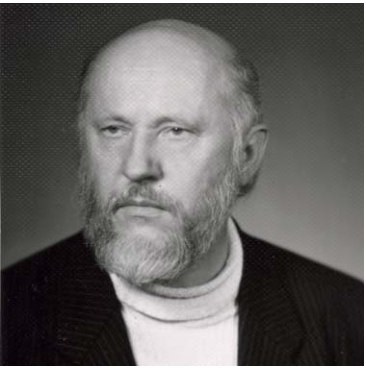
Knuts Skujenieks
1936 – 2022
- Cemetery
- Rainis Cemetery / Raiņa kapi, Riga, Latvia
Knuts Skujenieks continued to write under circumstances intended to silence independent thought. After his conviction in 1962, he spent seven years in a Soviet labour camp in Mordovia. Poetry became a way of preserving intellectual freedom and a connection with life beyond imprisonment. His subsequent career encompassed original verse and extensive translation. Bringing other poetic traditions into Latvian was a major part of his literary contribution, alongside the publication of work written during captivity. The delayed appearance of his prison poems shows how political conditions can separate the creation of literature from its readership. His life and writing offer an account of endurance in which linguistic precision and imagination remained essential resources. Skujenieks was born in Riga on 5 September 1936, the son of writer Emils Skujenieks. His childhood was disrupted by bereavement and wartime separation. After losing his mother, he spent time in an orphanage before relatives took him into their care. His father went into exile in 1944, leaving him in Latvia. Family connections abroad subsequently became a source of official suspicion under Soviet rule. His early life therefore unfolded within a wider history of separated Latvian families and restrictions on contact with the world beyond the Soviet Union. [3] During the 1950s he belonged to Baltikum, a Moscow association established by students from Latvia, Lithuania and Estonia. Its activities included choral singing, folk dancing and a popular-music ensemble, and members gathered on holidays. Skujenieks appeared with its performers on Moscow television. Soviet authorities later characterised the association as nationalist. His own prosecution included not only an allegation of anti-Soviet propaganda but also the charge that he had failed to report acquaintances’ conversations to the KGB. Such accusations belonged to a repressive setting in which reading Western publications or making political jokes could lead to imprisonment. [3] The camp population included intellectuals from many of the Soviet Union’s national communities. Cultural evenings and exchanges among prisoners formed part of life there, alongside the conditions of punishment. Skujenieks wrote approximately a thousand poems during his confinement and translated the biblical Song of Songs. Following his release in 1969, he could return to literary activity, but other opportunities remained closed. Invitations to work at the Latvian State University and the Latvian Academy of Sciences were blocked by the security authorities. Translation of poetry and prose consequently provided his livelihood. [3] His translation practice involved repeated independent study rather than specialisation in a single language. After completing one book, he would begin learning another language and seek further material. His published translations eventually included twenty poetry collections, while his dramatic translations numbered more than twenty plays. The literary traditions he brought into Latvian included Greek, Macedonian, German, Polish, Russian, Ukrainian, Scandinavian and American poetry. He also translated folk songs from Greek, Polish, Lithuanian, Moldavian, Finnish, Spanish and Slovak sources. This work established sustained literary connections across both national and linguistic boundaries. [3] Permission to publish his first collection of original poems came only in 1978. Nature and love were important subjects in verse that emphasised feeling rather than the direct treatment of social conflict prescribed by socialist realism. His output recorded in the chapter comprises twelve books of poetry and a volume of criticism and essays. His poems reached readers in other languages, and composer Pēteris Vasks set his work to music. Beyond publishing, Skujenieks contributed to Latvia’s Language Law and helped establish national cultural associations. He led the Latvian section of PEN from 1989 to 1991. [3] Recognition came through literary prizes, institutional honours and state decorations. He received the A. Upīts Prize in 1987 and became an honorary member of the Latvian Academy of Sciences in 1992. Awards followed from Lithuania, Ukraine and Sweden, including the Yotvingian poetry prize in 1993, the Ivan Franko Prize in 1994 and the Tomas Gösta Tranströmer Prize in 1998. Latvia awarded him the Order of the Three Stars in 1995 and its annual literature prize in 2001. Spanish and Lithuanian orders also acknowledged his contribution, reflecting the international reach of his literary and cultural work. [3]
The book A Hundred Great Latvians, which includes this person, can be purchased here.
The map marker shows the cemetery; the exact grave position is not yet established.
Sources & Further Reading
Books
- [3] Apinis, P. A Hundred Great Latvians. Nacionālais apgāds, Riga, 2006, pp. 168-169. ISBN 9984-26-288-X.