
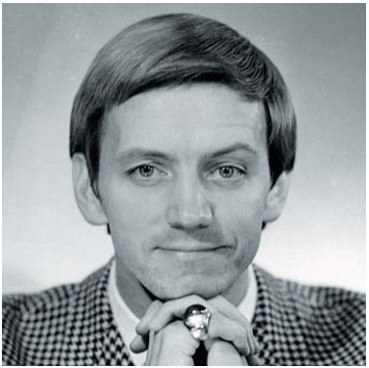
Māris Liepa
1936 – 1989
- Cemetery
- Vagankovskoye Cemetery, Moscow, Russia
Māris Liepa brought dramatic force and a strong sense of character to ballet. Trained in Riga, he developed an international reputation through his work with the Bolshoi Ballet. His interpretation of Crassus in Spartacus became especially associated with his name. His artistry involved more than technical execution. Gesture, posture and the relationship between characters helped him make dance a form of theatre. His career also reflected the opportunities and constraints facing performers within major Soviet institutions. Later work included teaching and other stage and screen activity. He died in Moscow in 1989. His performances remain part of the history of Latvian dance talent working on international stages. Born on 27 July 1936, Māris Rūdolfs Liepa entered a ballet community whose institutional foundations had been laid after the First World War. Riga’s early troupe included many Russian dancers who had left their country following the 1917 Revolution. He attended the Riga Choreography School and appeared in theatrical and ballet performances while still a pupil. Further study took him to the Moscow School of Ballet between 1953 and 1955, before his performances at the Riga Opera and Ballet Theatre attracted wider attention. [2] An important early opportunity came through the role of Tots in Spēlēju, dancoju. Maya Plisetskaya saw him in the part and invited him to perform with her in Budapest. In 1956 he joined Moscow’s Stanislavsky and Nemirovich-Danchenko Academic Music Theatre, taking leading parts over four seasons. His move to the Bolshoi followed in 1960, at the invitation of chief ballet-master Leonid Lavrovsky. There he became a principal dancer, working in an institution whose repertoire offered him a broad succession of major roles. [2] International engagements placed him alongside prominent ballerinas and before audiences in several leading theatres. At the Paris Opera he danced Giselle with Yvette Chauviré; at Covent Garden he appeared in Romeo and Juliet with Margot Fonteyn. After the London performance, Queen Elizabeth II invited him to join her for champagne. New York audiences saw his Crassus at the Metropolitan Theatre. His participation in Yuri Grigorovich’s 1970 production of Swan Lake was followed by successful guest appearances in France, Britain and the United States. The Paris Academy of Dance subsequently selected him as its outstanding dancer for 1970. [2] The development of Spartacus involved Liepa in changes to the work itself. He initially danced Spartacus, while Crassus had a much smaller stage presence. Following his suggestion, Aram Khachaturian revised the music and Grigorovich reworked the libretto, giving both opposing figures substantial solo material. Vladimir Vasilyev performed Spartacus and Liepa took Crassus. His interpretation earned the Lenin Prize in 1970. Further recognition included the Vaclav Nijinsky Prize in 1971, the title of People’s Artist of the USSR in 1976 and the Marius Petipa Prize in 1977. [2] His work as a ballet-master included a revival of Mikhail Fokin’s 1911 miniature Le Spectre de la rose, set to music by Carl Maria von Weber. He also created choreography for himself and other dancers. From 1983 to 1985 he served as artistic director at the Sofia National Opera, where he staged Don Quixote and The Sleeping Beauty. His activities extended to teaching choreography with Boris Eifman’s troupe, collaborating on dramatic and movement productions, and writing professionally about ballet. These undertakings accompanied, rather than replaced, his work as a performer. [2] Cinema provided another setting for his acting, with appearances in Your Name in 1966, The Lion’s Grave in 1971, The Fourth in 1972 and Lermontov in 1986. His children, Andris and Ilze, also became ballet dancers. Liepa was buried in Moscow’s Vagankovskoye Cemetery. In 1989 the Moscow City Council approved a proposed ballet theatre bearing his name, but the project was not realised. The company of dancers he had assembled instead received the name Moscow Festival Ballet, leaving a concrete institutional connection to his final theatrical plans. [2]
The book A Hundred Great Latvians, which includes this person, can be purchased here.
The map marker shows the cemetery; the exact grave position is not yet established.
Sources & Further Reading
Books
- [2] Apinis, P. A Hundred Great Latvians. Nacionālais apgāds, Riga, 2006, pp. 166-167. ISBN 9984-26-288-X.
Web resources
- [1] Māris Liepa