
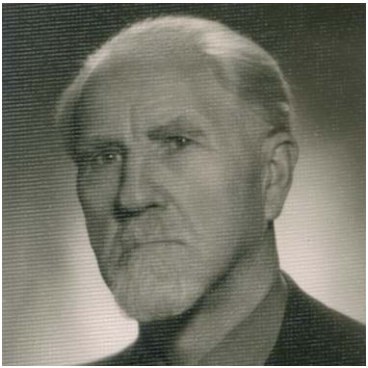
Vilis Rīdzenieks
1884 – 1962
- Cemetery
- Forest Cemetery / Meža kapi, Riga, Latvia
Vilis Rīdzenieks created photographs that became part of Latvia’s public memory. His record of the proclamation of the republic on 18 November 1918 is particularly significant, preserving the appearance of an event known to later generations largely through images. His career also included studio portraits, street scenes and the documentation of people and institutions. Photography in this setting was both a profession and a means of constructing a historical record. Rīdzenieks died in Riga in 1962. Rīdzenieks was born on 15 December 1884 in Žagare, then in Kaunas Province, in present-day Lithuania. He taught himself photography while attending school and completed his secondary education in Šiauliai in 1900. Participation in the revolution of 1905 led him to conceal his identity under the name Aleksandrs Mednis, which he used until 1925. He subsequently went to St Petersburg to develop his photographic skills. Returning to Latvia in 1908, he worked in Riga and Liepāja and travelled through Kurzeme by bicycle, photographing landscapes and scenes of everyday life. [2] In 1910 he established a photographic salon in Ventspils. He corresponded with the Moscow photographer Y. Melodiyev and joined the All-Russian Photographers’ Union, connecting his local practice with a wider professional community. His work soon attracted awards: a collection earned a gold medal at an All-Russian exhibition in 1911, and he took first prize in a Gevaert international competition held in 1911–1912. His experiments included carefully arranged lighting, compositional methods and painting directly on the emulsion of negatives. He also produced bromoil and gum prints, extending his practice beyond straightforward documentary recording. [2] The move to Riga in 1915 brought the establishment of his Klio salon. Wartime assignments placed him within military institutions: he photographed for the engineering department of the Riga fortifications district between 1916 and 1920 and for the Latvian Army’s Latgale Division headquarters in 1919–1920. His documentary subjects included Latvian riflemen in the Tīrelis marshes and on Nāves sala, refugees from Kurzeme, and damaged buildings in Riga. These bodies of work recorded soldiers, displaced civilians and the physical consequences of war, forming a substantial historical record beyond any single ceremonial image. [2] During the interwar years, Klio attracted prominent figures from the arts, music, literature and science. Rīdzenieks also followed public occasions outside the studio. He made a sequence of one hundred photographs documenting Rainis’s return to Latvia in 1920, accompanied President Jānis Čakste on an official visit to Finland, and photographed visiting figures including Sweden’s King Gustav V in 1929 and the composer Alexander Glazunov in 1931. His photographs appeared alongside those of Jānis Rieksts in National Geographic’s October 1924 article about Latvia. A portrait of composer Emīls Dārziņš’s mother won a gold medal at the Wimbledon International Photography Exhibition in 1928. [2] Professional organisation and teaching were further parts of his work. He chaired the Latvian Photographic Society, founded the Trade Union of Latvian Photographers in 1924, and organised exhibitions and competitions within Latvia while participating in international exhibitions. At K. Barons People’s School in Riga he taught photography, and in 1930 he introduced a course for amateurs. Official recognition included the Order of the Three Stars on 13 November 1930 and the Cross of Recognition on 16 November 1938. His contribution therefore included both the production of photographs and practical support for the development of the profession. [2] On 29 June 1941, Rīdzenieks photographed St Peter’s Church burning in Riga. After the war, under Soviet occupation, he headed the photographic laboratory at the Academy of Sciences institute concerned with forestry problems and timber chemistry. Although his creative activity was restricted during this period, he participated in Latvia’s first post-war photographic exhibition in 1958. Approximately five thousand of his negatives and original photographic prints are preserved in museums. His burial place is in Riga’s Meža kapi, while this surviving archive retains evidence of the range of subjects and techniques that occupied him over decades. [2]
The book A Hundred Great Latvians, which includes this person, can be purchased here.
The map marker shows the cemetery; the exact grave position is not yet established.
Sources & Further Reading
Books
- [2] Apinis, P. A Hundred Great Latvians. Nacionālais apgāds, Riga, 2006, pp. 86-87. ISBN 9984-26-288-X.
Web resources
- [1] Vilis Rīdzenieks