
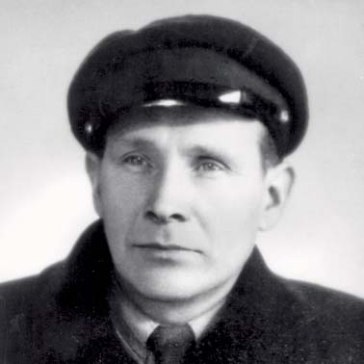
Žanis Lipke
1900 – 1987
- Cemetery
- Forest Cemetery / Meža kapi, Riga, Latvia
Žanis Lipke, also known as Jānis Lipke, helped people escape Nazi persecution during the Holocaust in Latvia. Working with his wife Johanna and a network of helpers, he arranged hiding places, supplies and routes out of immediate danger. These actions depended on repeated practical decisions under extreme risk. The shelter associated with the family’s home in Ķīpsala became central to the later telling of this history. Lipke was recognised as Righteous Among the Nations. The memorial museum in Ķīpsala and his grave in Riga are distinct places with different roles in remembrance. Lipke was born in Jelgava on 1 February 1900 and earned his living as a workman. Before the wartime persecution, Jewish communities participated extensively in Latvia’s economic, political and cultural life. During the independent republic between 1918 and 1940, they possessed cultural autonomy and access to state-supported schooling in Hebrew and Yiddish. In the closing years of the 1930s, Latvia also received Jewish refugees fleeing Nazi persecution elsewhere in Europe. This established community, together with refugees and later deportees, faced radically changed circumstances under successive occupations. [2] The Soviet occupation of June 1940 brought arrests, deportations and other repression affecting thousands of citizens, including Jewish people. Under the German occupation from 1941 to 1945, the persecution became a campaign of mass murder. The chapter records at least 60,000 victims of wholly or partly Jewish ancestry among Latvia’s inhabitants. A further 21,000 arrested Jews were brought into Latvia from other European countries, and more than half died there. Those who attempted to shelter persecuted people faced the death penalty and could not know how long concealment would be necessary. [2] Lipke’s position as a foreman at German Luftwaffe warehouses gave him contact with prisoners assigned to forced labour. He accompanied Jewish workers from the Riga ghetto to the warehouses in the morning and brought them back afterward. He also supplied ghetto inmates with food and medicines. One rescue method involved friends who attached the compulsory yellow star to their own clothing and joined the group returning to the ghetto. Once inside, these helpers removed the identifying badges and escaped. Their participation made it possible to substitute other people for Jewish workers in the returning party. [2] The danger reached Lipke’s own household early in the occupation. Police searched his home in September 1941, but he succeeded in bribing them with alcohol. On 25 October, the ghetto was sealed; mass shootings formed part of the escalating persecution. Lipke concealed people in an underground bunker in his garden and in sheds around the house’s inner courtyard. The chapter credits him with saving fifty-seven Jewish people, out of approximately 450 saved in Latvia. It also distinguishes his assistance as having been given without financial reward. [2] Early in 1943, a new job enabled Lipke to travel throughout Latvia, extending the geographical reach of his rescue work. He began arranging refuge outside Riga with the assistance of rural householders. Near Dobele, he constructed bunkers at a farmer’s home in which Jewish people were subsequently hidden. The aftermath did not bring uncomplicated recognition for all who had helped: the chapter records that a village elder who had sheltered people was later deported to Siberia by the Soviet authorities as an alleged Nazi collaborator. [2] Lipke’s rescue activities received little acknowledgment from the Soviet authorities, although Australia and Israel honoured him. In 1966, Yad Vashem recognised both him and Johanna. Permission to visit his son in Australia finally came in 1977, allowing him to leave the Soviet Union and accept the Israeli medal awarded eleven years earlier. He died on 14 May 1987 and was buried in Riga’s Meža kapi. On 4 July 1995, a plaque was unveiled at the former Great Ghetto in Riga commemorating Lipke together with the other rescuers of Latvia’s Jewish people. [2]
The book A Hundred Great Latvians, which includes this person, can be purchased here.
The map marker shows the cemetery; the exact grave position is not yet established.
Sources & Further Reading
Books
- [2] Apinis, P. A Hundred Great Latvians. Nacionālais apgāds, Riga, 2006, pp. 116-117. ISBN 9984-26-288-X.