
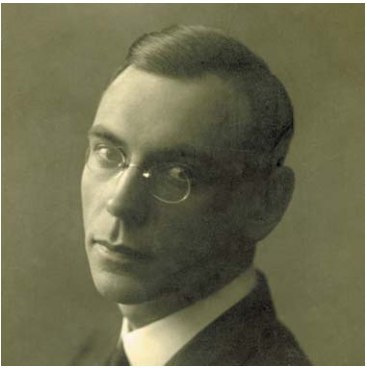
Zigfrīds Anna Meierovics
1887 – 1925
- Cemetery
- Forest Cemetery / Meža kapi, Riga, Latvia
Zigfrīds Anna Meierovics helped secure international recognition for the emerging Latvian state. His diplomatic activity before and after the declaration of independence was important in establishing relationships on which a small new republic depended. As Latvia’s first foreign minister, and at times prime minister, he worked on recognition, security and participation in international institutions. These achievements required negotiation as well as public advocacy. His career ended in a car accident in 1925, leaving a relatively short but consequential record of service. Born in Durbe on 7 February 1887, Meierovics was the son of Hermanis Meierovics, a Christian Jewish physician, and his Latvian wife, Anna Fīlholde. His mother died in childbirth, and his father became seriously ill. His upbringing therefore passed to his mother’s brother, Roberts Fīlholds, who was a teacher. Meierovics later completed his studies in the trade department of Riga Polytechnical Institute. Before entering national politics, he worked in education: from 1909 until 1915 he earned his living as a teacher. His subsequent wartime work took him to Moscow. [2] In 1915 Meierovics headed the Cultural Office within the Central Committee of Latvian Refugees in Moscow. By 1917 he was participating in the Latvian Provisional National Council and arranging discussions with Russia concerning Latvian autonomy. During the following year, his work extended to the British government. Foreign Secretary A. J. Balfour gave oral de facto recognition to Latvia on 23 October 1918, followed by written confirmation on 11 November. These exchanges preceded the proclamation of the republic in Riga on 18 November, while the city remained under German occupation. Meierovics received his appointment as foreign minister the next day. [2] The new ministry required both an administrative structure and a diplomatic service, and Meierovics undertook their establishment while defining the direction of Latvia’s external relations. From late 1918 through the first half of 1919, he led the Latvian peace delegation’s work in London and Paris. Alongside these dealings with the Western powers, he pursued cooperation among the Baltic states. He organised a conference in Helsinki in January 1920 and chaired another at Bulduri in August. His proposed Baltic alliance was intended to resist external pressure. Efforts to bring it into being continued through 1925 without achieving that objective. [2] Negotiations with Germany and Russia formed another substantial part of his responsibilities in 1920. The resulting peace treaties were concluded on 15 July and 11 August respectively. On 6 November that year, Meierovics set out for Rome, Paris and London to pursue de jure recognition of the Baltic states. Latvia obtained that recognition from the Supreme Council of the Allied powers on 26 January 1921. Admission to the League of Nations followed on 22 September. In September 1923, the League’s assembly elected him vice-president of its Political Commission, giving him a further role within the international organisation. [2] Commercial agreements also occupied a place in his diplomatic programme. In 1922 he signed treaties granting most-favoured-nation treatment with the United Kingdom and Czechoslovakia. His stated policy distinguished between the region’s economic and strategic functions: Baltic territory could connect eastern and western trade, while political and military cooperation should counter a possible alignment between Russia and Germany. At home, he served in the National Council, the Constituent Assembly and the first Saeima. He also headed two governments between 1921 and 1924. His public responsibilities thus extended across foreign affairs, parliamentary service and the leadership of the cabinet. [2] The account of his political conduct records his ability to ease disagreements within parliament and government and his respectful treatment of allies and opponents alike. He received the first-class Order of the Three Stars. Photographs document his diplomatic visit to Rome in July 1925, including a wreath-laying at the Tomb of the Unknown Soldier. Following his death on 22 August, he was buried in Riga’s Meža kapi. His family’s later public history included his son Gunārs, who led Latvian organisations in exile and, after returning to Latvia in 1991, served in the Saeima and the Ministry of Foreign Affairs. [2]
The book A Hundred Great Latvians, which includes this person, can be purchased here.
The map marker shows the cemetery; the exact grave position is not yet established.
Sources & Further Reading
Books
- [2] Apinis, P. A Hundred Great Latvians. Nacionālais apgāds, Riga, 2006, pp. 90-91. ISBN 9984-26-288-X.